
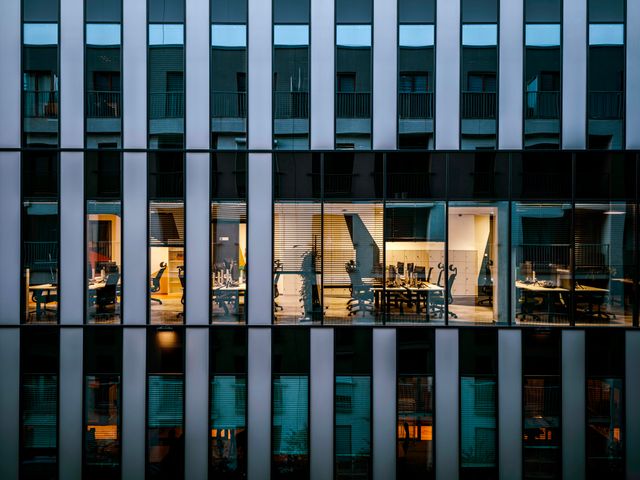
Why Some Places Feel Alive and Others Feel Designed
There is a strange difference between places that are beautiful and places that feel alive.
A perfectly designed hotel lobby can be visually impressive and still feel empty. A narrow neighborhood street with uneven sidewalks, mismatched storefronts and a café spilling onto the pavement can feel memorable within minutes.
The difference is difficult to photograph because it is not really about aesthetics.
It is about evidence of life.
Places feel alive when they show traces of people adapting them over time. A chair has been moved into the sun. A shopkeeper has added a handwritten sign. Somebody has put plants on a balcony. A restaurant has expanded onto the sidewalk because people kept showing up.
None of these details were necessarily part of a master plan.
That may be exactly why they matter.
Designed Space and Lived Space Are Not the Same Thing
Modern development often tries to manufacture atmosphere.
A district is given coordinated signage, carefully selected street furniture, controlled landscaping and a visual identity intended to make it feel distinctive.
Sometimes it works.
But there is a limit to how much character can be installed.
Character usually appears after people begin using a place in ways nobody fully predicted.
A bench becomes a meeting point. A blank wall becomes a landmark because someone paints it. A corner shop starts placing two plastic chairs outside every afternoon. A plaza designed for circulation becomes somewhere teenagers sit for hours.
The original design creates possibilities.
Life decides which ones matter.
This may explain why older neighborhoods often feel richer than newer ones even when the newer development is cleaner, safer and more technically accomplished. The older place has accumulated decisions that were made by thousands of people rather than a single design team.
It contains evidence of negotiation.
Imperfection Is Information
We tend to think of wear as damage.
A polished floor should remain polished. A wall should remain clean. A sign should remain straight.
But wear also tells us how a place is used.
Stone steps become shallow in the middle because generations of people walked the same path. Brass handles become brighter where thousands of hands touched them. Grass disappears along the route people actually prefer, even if the architect placed the official path somewhere else.
These marks are information.
They reveal behavior.
Urban planners even have a name for some of this. A “desire path” is the unofficial trail people create when the designed route does not match the route they naturally want to take.
It is one of the simplest examples of humans rewriting a system through repeated use.
The landscape records the vote.
The Problem With Spaces That Are Too Finished
Some environments feel uncomfortable precisely because nothing appears negotiable.
Everything is fixed.
The furniture belongs exactly where it was placed. The plants are decorative rather than personal. The walls contain nothing accidental. Every surface communicates that somebody else has already decided what the place should be.
That can create beauty, but it can also create distance.
A space that feels complete leaves very little room for participation.
By contrast, places that tolerate small acts of modification often become more emotionally accessible. A community noticeboard, movable chairs, outdoor tables, chalk signs, open storefronts and informal gathering spaces all create a subtle message:
You are allowed to affect this place.
That permission matters more than it seems.
People Remember Interactions, Not Layouts
Ask someone about a city they love and they rarely describe its zoning.
They remember a bakery they stumbled into.
A street musician.
A strange bookstore.
A dog asleep in the entrance of a shop.
A conversation with someone at a bar.
The physical city matters because it creates the conditions for those things to happen.
This is an important distinction.
A successful place is not simply one that looks good. It is one that produces opportunities for interaction, surprise and discovery.
That is why overly controlled environments can become forgettable. If every experience has already been anticipated, there is little chance of encountering something unexpected.
Memory likes irregularity.
Convenience Can Flatten a Place
There is also a tension between efficiency and identity.
The most efficient commercial environment is predictable. The same store layout, same ordering process, same signage and same product selection can be reproduced anywhere.
That predictability is useful.
It is also one reason airports, shopping centers and business districts can begin to resemble one another across continents.
The local differences have been engineered out.
The more efficiently a place performs a standardized function, the less information it may contain about where it actually is.
This does not mean convenience is bad.
It means convenience has a cost when it becomes the only objective.
A city composed entirely of optimized experiences would be remarkably easy to navigate and remarkably difficult to remember.
Why Small Businesses Change Streets
Independent businesses often contribute disproportionately to the character of a neighborhood because they introduce variation.
A family restaurant makes different decisions from the café next door. A hardware store displays objects in a way no design manual would recommend. A bookstore owner devotes an entire window to something obscure simply because they care about it.
These decisions create texture.
Chain businesses can certainly occupy meaningful places, but their strength usually comes from consistency. Independent businesses often do the opposite: they reflect individual judgment.
That makes streets less predictable.
And unpredictability, within reasonable limits, is one of the ingredients of interesting places.
Good Places Leave Something Unfinished
Perhaps the best environments are not actually complete.
They provide structure without prescribing every outcome.
They make movement easy but allow people to stop.
They create public space without deciding exactly how it must be used.
They tolerate adaptation.
They leave enough flexibility for people to contribute something.
This idea applies beyond cities.
Homes feel more welcoming when they contain evidence of the people who live there. Offices feel less sterile when employees can alter their surroundings. Websites feel more human when they reveal judgment rather than merely following a template.
The principle is surprisingly consistent.
We respond to signs that someone has been here.
Life Is Messier Than Design
Design seeks coherence.
Life introduces exceptions.
The interesting places are usually where the two are allowed to coexist.
A city needs planning. Buildings need structure. Public spaces need rules. Without those things, disorder quickly stops being charming.
But complete control creates a different problem.
It leaves no room for the small adaptations through which people develop attachment.
The most memorable places are rarely perfect.
They have been adjusted, repaired, personalized, ignored, rediscovered and used differently from how somebody originally imagined.
They have acquired history in public.
That may be what we are sensing when we say a place has character.
Not beauty.
Not age.
Not even authenticity, exactly.
We are noticing that people have been allowed to leave a mark.